There was a time when becoming an American ambassador required something resembling diplomatic experience, international knowledge, political judgment, and the ability to represent the interests of the United States without turning an embassy into a personal clubhouse. Under Donald Trump, however, the appointment process increasingly resembles a family loyalty programme. Have you donated enough? Have you praised the boss sufficiently? Are you close enough to the family to know which doors open and which secrets must remain locked?
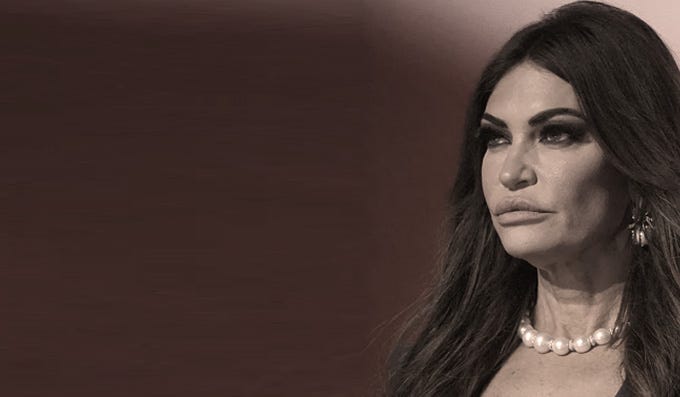
Kimberly Ann Guilfoyle apparently understood the importance of networking. The former Fox News personality, Republican fundraiser and former …fiancée of Donald Trump Jr. became America's ambassador to Greece. Her appointment raised questions about the increasingly blurred boundaries between political loyalty and diplomatic qualifications. However, on 13 October 2026, the curtain fell. Guilfoyle resigned after White House press secretary Katie Zacharia announced that the administration had asked her to step down.
The official farewell was predictably polite. Guilfoyle had been a wonderful asset, Zacharia said and the White House wished her well. Washington has a remarkable talent for turning political embarrassment into a farewell card.
But the departure is bigger than one ambassador's career. It raises a much more uncomfortable question, what exactly does Greece mean to Donald Trump's America if a position of such strategic importance can become entangled with personal connections to the presidential family?
That is the question Athens should be asking Washington. Greece is not a decorative Mediterranean postcard where an American political celebrity can spend a few years enjoying sunshine, receptions and expensive dinners. It occupies a strategically significant position connecting Europe, the Balkans and the Eastern Mediterranean with implications for NATO, regional security, energy infrastructure, maritime routes and relations with Turkey. Its proximity to the Middle East makes its diplomatic importance even more obvious.
This is serious business. It requires serious representation. Yet Trump's approach to public appointments has repeatedly suggested that proximity to the family can be more valuable than professional experience. Loyalty becomes a qualification, personal relationships become political currency and institutions are expected to accommodate the preferences of a president who often treats government as an extension of his own brand.
In this system, an ambassador risks becoming less a representative of the United States than a representative of the president's personal interests. The distinction is not academic. American diplomats are supposed to advance national interests, maintain relationships with host governments and protect their country's credibility. They are not supposed to create uncertainty about whether official meetings, diplomatic access, or political connections might serve private interests. Even the appearance of such conflicts can damage trust.
The allegations surrounding Guilfoyle were serious. Reports alleged that she sought a $100,000 payment from a political donor to cover a personal credit card bill, potentially in exchange for access to senior administration officials. Other allegations concerned her interactions with Greek business interests and the use of diplomatic influence. Her lawyers disputed the accusations and defended her conduct. These remain allegations, not established findings of guilt, and her resignation does not settle the questions surrounding them.
But the political consequences are already clear. An ambassador appointed amid questions about political connections has departed amid questions about conduct, leaving the administration to manage the damage.
And what does this tell us about the appointment process? If Guilfoyle's relationship with Trump Jr. helped make her politically attractive for the position, the problem extends beyond her individual qualifications. It concerns a system in which personal proximity to power can appear to count more than the professional demands of the job.
The White House's request for her resignation also exposes the fragility of political patronage. The same administration that entrusted her with a sensitive diplomatic position ultimately decided that the controversy had become too costly. Loyalty can open doors in Washington, but it does not guarantee that those doors will remain open when the headlines turn sour.
What an extraordinary way to run a foreign policy. If Guilfoyle's departure leads to a serious review of diplomatic appointments, ethics procedures, and accountability, something useful might yet emerge from this episode. If she is simply replaced by another politically connected loyalist, the nameplate will change while the machinery remains untouched.
Greece and in fact every other country, deserve better than to become collateral damage in Washington's family politics. Its government and public should be entitled to expect an American ambassador who understands the responsibilities of the office, respects Greek sovereignty and can conduct diplomacy without private controversies overshadowing official business.
Americans deserve better, too. Their diplomatic service is not a collection of reward positions for political loyalty, fundraising enthusiasm, or romantic proximity to the president's family. Guilfoyle's resignation closes one chapter, but it does not answer the most important question: who was responsible for deciding that she was the right person to represent American interests in Athens and what criteria mattered most in that decision?
The real scandal is not simply that Kimberly Guilfoyle has left her post. It is that her appointment raised such fundamental questions about how the post was awarded in the first place. If family connections can become a route into diplomacy, then the problem extends far beyond one woman. It concerns a presidency in which personal loyalty risks becoming foreign policy and a country whose strategic interests deserve considerably more than a presidential favour.
* * * * * * * * * *
Published in Ovi magazine and across diverse print & digital platforms.


