Showing posts with label Greece. Show all posts

Wednesday, November 11, 2026

The idiots who keep opening the door to fascism in Greece

From television studios to football terraces, from Cyprus to Greece, the grotesque political resurrection of Ilias Kasidiaris is becoming another uncomfortable demonstration that while history does not necessarily repeat itself, stupidity certainly has an excellent memory.

There is something profoundly rotten about a democracy that spends years explaining why a dangerous political movement must be confronted, only to invite its most recognisable representatives back into the living rooms of ordinary citizens as though they were merely controversial entertainers. And there is something even more depressing about a media establishment that apparently cannot distinguish between political journalism and the rehabilitation of political extremism.

Ilias Kasidiaris, the former Golden Dawn figure convicted of participating in a criminal organisation and imprisoned, is once again sucking up attention, visibility and political oxygen. His reappearance in the public conversation, whether through television exposure, political manoeuvring, football-related spectacles, or the circulation of his image beyond Greece, raises a question that should embarrass every serious journalist: Have the Greek media learned absolutely nothing? Apparently not.

Kasidiaris is not some misunderstood provincial politician whose career was interrupted by an unfortunate administrative oversight. He was one of the most recognisable faces of a movement whose political identity was inseparable from authoritarian nationalism, violent intimidation and the glorification of Nazi symbolism. Golden Dawn was not simply another party with over-enthusiastic supporters and a bad taste in uniforms. Its criminal character was established by the Greek judiciary. The murder of Pavlos Fyssas, the violence against immigrants, and the systematic intimidation carried out by its members were not imaginary political inconveniences; they were documented crimes. Yet here we are again, watching the familiar machinery of publicity warm up.

The Greek media have a peculiar talent for turning political danger into television entertainment. Give them an inflammatory personality, a provocative statement, an outrageous gesture, or a carefully manufactured confrontation, and suddenly the studio lights come on. The presenter smiles, the cameras roll, the audience gets its spectacle, and the extremist gets precisely what he came for: recognition, legitimacy, and an audience larger than he could ever assemble through ordinary political debate.

The business model is embarrassingly simple. Controversy produces clicks. Anger drives ratings. Extremism, properly packaged, becomes prime-time entertainment. And somewhere inside this commercial circus, democratic responsibility quietly slips out the back door.

The problem is not that journalists should refuse to cover Kasidiaris. Democracies cannot operate through censorship, convenient silence, or the suppression of uncomfortable political realities. The problem lies in the distinction between reporting on an extremist and providing him with an uncritical platform for political rehabilitation. Journalism should interrogate, expose, contextualise, and challenge. It should not function as an unpaid public-relations firm for men whose careers depend on exploiting democratic freedoms while holding democratic values in utter contempt.

There is also a staggering contradiction at the heart of the Greek public conversation. Politicians, commentators and respectable citizens repeatedly declare themselves shocked by the rise of the far right, yet the very same political culture keeps feeding these personalities the publicity that makes their resurrection possible. Then everyone acts surprised when the monster walks back into the room.

From Greece to Cyprus, the circulation of such figures and their political mythology should alarm anyone who understands how easily national grievances, economic frustrations, and social anxieties can be weaponised into combustible nationalist theatre. The far right does not need an entire society to turn fascist overnight. It simply requires enough people to become indifferent, enough institutions to grow complacent, and enough media outlets to decide that another provocative headline matters more than democratic vigilance.

Football offers another convenient stage. Stadiums, tribal loyalties, posture-heavy masculinity, and nationalist symbols provide an emotionally charged environment where political extremism can disguise itself as cultural identity or patriotic enthusiasm. Naturally, not every football supporter is an extremist. But pretending that political movements do not exploit football culture is just another exercise in wilful blindness.

This is precisely where the Greek media deserve the sharpest criticism. They know the history. They know the judicial verdicts. They know the images, the violence and the political consequences. They know perfectly well what kind of toxic language is being recycled. Their responsibility is therefore greater, not smaller.

History may repeat itself, but it rarely does so without a nudge. Somebody has to open the door. Somebody has to switch on the cameras. Somebody has to decide that a convicted extremist deserves another round of publicity because it might boost the ratings.

Democracy is not merely the right to appear on television; it is the responsibility to defend the political conditions that make television, journalism, and freedom of speech possible in the first place.

Kasidiaris may well want to launch another political career. That is a matter for democratic institutions and the law. But the Greek media need to ask themselves whether they intend to remain journalists or become the marketing department for democratic self-destruction.

Because when fascism returns wearing a familiar face, the most dangerous idiots are not necessarily the ones cheering in the audience.

They are the respectable people behind the cameras who insist they are merely doing their jobs.

* * * * * * * * * *

Published in Ovi magazine and across diverse print & digital platforms.


Thursday, October 15, 2026

Athens Guilfoyle, Inc.

There was a time when becoming an American ambassador required something resembling diplomatic experience, international knowledge, political judgment, and the ability to represent the interests of the United States without turning an embassy into a personal clubhouse. Under Donald Trump, however, the appointment process increasingly resembles a family loyalty programme. Have you donated enough? Have you praised the boss sufficiently? Are you close enough to the family to know which doors open and which secrets must remain locked?


Kimberly Ann Guilfoyle apparently understood the importance of networking. The former Fox News personality, Republican fundraiser and former …fiancée of Donald Trump Jr. became America's ambassador to Greece. Her appointment raised questions about the increasingly blurred boundaries between political loyalty and diplomatic qualifications. However, on 13 October 2026, the curtain fell. Guilfoyle resigned after White House press secretary Katie Zacharia announced that the administration had asked her to step down.

The official farewell was predictably polite. Guilfoyle had been a wonderful asset, Zacharia said and the White House wished her well. Washington has a remarkable talent for turning political embarrassment into a farewell card.

But the departure is bigger than one ambassador's career. It raises a much more uncomfortable question, what exactly does Greece mean to Donald Trump's America if a position of such strategic importance can become entangled with personal connections to the presidential family?

That is the question Athens should be asking Washington. Greece is not a decorative Mediterranean postcard where an American political celebrity can spend a few years enjoying sunshine, receptions and expensive dinners. It occupies a strategically significant position connecting Europe, the Balkans and the Eastern Mediterranean with implications for NATO, regional security, energy infrastructure, maritime routes and relations with Turkey. Its proximity to the Middle East makes its diplomatic importance even more obvious.

This is serious business. It requires serious representation. Yet Trump's approach to public appointments has repeatedly suggested that proximity to the family can be more valuable than professional experience. Loyalty becomes a qualification, personal relationships become political currency and institutions are expected to accommodate the preferences of a president who often treats government as an extension of his own brand.

In this system, an ambassador risks becoming less a representative of the United States than a representative of the president's personal interests. The distinction is not academic. American diplomats are supposed to advance national interests, maintain relationships with host governments and protect their country's credibility. They are not supposed to create uncertainty about whether official meetings, diplomatic access, or political connections might serve private interests. Even the appearance of such conflicts can damage trust.

The allegations surrounding Guilfoyle were serious. Reports alleged that she sought a $100,000 payment from a political donor to cover a personal credit card bill, potentially in exchange for access to senior administration officials. Other allegations concerned her interactions with Greek business interests and the use of diplomatic influence. Her lawyers disputed the accusations and defended her conduct. These remain allegations, not established findings of guilt, and her resignation does not settle the questions surrounding them.

But the political consequences are already clear. An ambassador appointed amid questions about political connections has departed amid questions about conduct, leaving the administration to manage the damage.

And what does this tell us about the appointment process? If Guilfoyle's relationship with Trump Jr. helped make her politically attractive for the position, the problem extends beyond her individual qualifications. It concerns a system in which personal proximity to power can appear to count more than the professional demands of the job.

The White House's request for her resignation also exposes the fragility of political patronage. The same administration that entrusted her with a sensitive diplomatic position ultimately decided that the controversy had become too costly. Loyalty can open doors in Washington, but it does not guarantee that those doors will remain open when the headlines turn sour.

What an extraordinary way to run a foreign policy. If Guilfoyle's departure leads to a serious review of diplomatic appointments, ethics procedures, and accountability, something useful might yet emerge from this episode. If she is simply replaced by another politically connected loyalist, the nameplate will change while the machinery remains untouched.

Greece and in fact every other country, deserve better than to become collateral damage in Washington's family politics. Its government and public should be entitled to expect an American ambassador who understands the responsibilities of the office, respects Greek sovereignty and can conduct diplomacy without private controversies overshadowing official business.

Americans deserve better, too. Their diplomatic service is not a collection of reward positions for political loyalty, fundraising enthusiasm, or romantic proximity to the president's family. Guilfoyle's resignation closes one chapter, but it does not answer the most important question: who was responsible for deciding that she was the right person to represent American interests in Athens and what criteria mattered most in that decision?

The real scandal is not simply that Kimberly Guilfoyle has left her post. It is that her appointment raised such fundamental questions about how the post was awarded in the first place. If family connections can become a route into diplomacy, then the problem extends far beyond one woman. It concerns a presidency in which personal loyalty risks becoming foreign policy and a country whose strategic interests deserve considerably more than a presidential favour.

* * * * * * * * * *

Published in Ovi magazine and across diverse print & digital platforms.


Thursday, October 08, 2026

The Balkans running dry

Brussels likes its Balkans in chapters. Chapter 23: judiciary. Chapter 24: justice, freedom, and security. Chapter 27: environment. Chapter 35: other issues. Tick the boxes, reform the institutions, pass the laws, appoint the committees, produce the paperwork and Europe will eventually open the door.


Meanwhile, the water is disappearing. That is the absurdity at the heart of the European Union’s enlargement conversation in 2026. Ursula von der Leyen is touring the Western Balkans again, talking about accession, reforms, integration and the €6 billion Growth Plan. The language is familiar: momentum, movement, membership. And yes, democratic institutions, functioning courts, and accountable governments matter. But there is something rather more primitive that tends to escape bureaucratic Brussels: people need water to live.

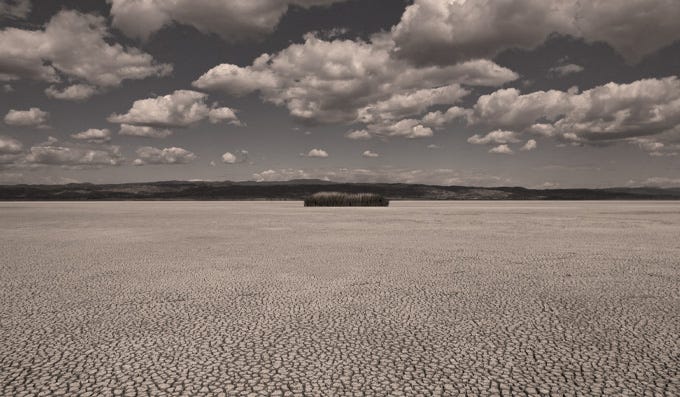
Look at Lake Koroneia in northern Greece. Once a major wetland, a refuge for migratory birds, and a source of livelihoods, it has collapsed to less than a tenth of its former size after years of declining rainfall, rising temperatures, and excessive irrigation. The lake is not presenting Brussels with a legal problem; it is presenting Europe with a warning.

And that warning is screaming. The Balkans are one of Europe’s climate pressure points. Droughts, wildfires, floods, soil degradation, water scarcity, and agricultural disruption do not respect borders, accession chapters, or the Schengen timetable. A river does not stop at a customs post because one country is an EU member and the other is waiting outside. A wildfire does not ask whether a government has completed its judicial reforms.

Yet European policy still too often treats the environment as another technical chapter to be closed rather than as the infrastructure of political survival. That is dangerously backward. What happens when farmers cannot reliably irrigate their fields? When hydropower becomes unpredictable? When forests burn repeatedly? When drinking-water systems become inadequate? When villages lose agricultural income and young people leave? When people begin moving because the land can no longer support them?

That is not some distant climate scenario. It is the beginning of political instability. The EU cannot seriously discuss enlargement while treating green infrastructure as a decorative attachment to accession. If Brussels wants a stable Western Balkans, it must invest in reservoirs, modern irrigation, wastewater treatment, cross-border river management, drought-resistant agriculture, renewable energy, forest restoration, and resilient cities. It must finance adaptation with the same political urgency it applies to roads, railways, and border systems.

Otherwise, Europe will build excellent transport corridors through increasingly uninhabitable landscapes.

There is also an uncomfortable hypocrisy here. Brussels demands that Balkan governments strengthen institutions, fight corruption, and improve governance. Fine. But environmental collapse itself exposes the weakness of governance. When water becomes scarce, every broken institution becomes more dangerous. Illegal extraction, political patronage, uncontrolled construction, agricultural overuse, and environmental corruption can turn a drought into a social crisis.

Climate policy, therefore, is not separate from enlargement policy. It is enlargement policy. The EU should stop imagining the Western Balkans as a collection of candidates waiting patiently outside Europe's bureaucratic door. These countries are already part of Europe's ecological system. Their rivers, forests, mountains, farms, and coastlines are European assets and European vulnerabilities.

If the European project means anything beyond moving paperwork from one desk to another, it must understand that security begins with water, food, functioning ecosystems, and communities capable of surviving the next summer.

Brussels can count accession chapters until the paperwork catches fire. The Balkans cannot afford to wait. The lake is disappearing. The question is whether Europe will notice before the people start disappearing with it.

* * * * * * * * * *

Published in Ovi magazine and across diverse print & digital platforms.

Sunday, October 04, 2026

The Aegean mirage

For decades, centuries and definitely going back to WWI, the West has been selling the same comfortable fantasy about the Eastern Mediterranean, Greece and Turkey are difficult neighbours, NATO keeps them talking, diplomats keep the temperature down and therefore everything is under control. It is a beautiful fantasy. It is also becoming dangerously detached from reality.

Whenever Ankara raises the temperature, Athens is advised to remain calm. Whenever Turkish ambitions collide with Greek sovereignty, Greece is encouraged to show restraint. Whenever the Aegean becomes another theatre of strategic pressure, European diplomacy discovers its favourite word: dialogue.


Dialogue is wonderful. Unfortunately, it does not define maritime boundaries, defend sovereignty or limit strategic ambition. While everyone has been congratulating themselves on the Mediterranean’s supposedly calm waters, Recep Tayyip Erdoğan has been building something considerably more ambitious, a strategic network extending far beyond traditional Western alliances, deep into the Gulf and South Asia.

The emerging defence relationship involving Turkey, Saudi Arabia, and Pakistan is not simply another diplomatic handshake. It is part of a broader Turkish effort to multiply its strategic options, cultivate regional partnerships and reduce dependence on any single geopolitical bloc.

This does not mean Turkey has abandoned NATO; that interpretation would be simplistic. The far more intriguing development is precisely the opposite: Ankara appears increasingly comfortable moving through several strategic worlds simultaneously.

NATO when NATO is useful. Regional partnerships when they are useful. Transactional diplomacy when that is useful. Strategic autonomy when nothing else will do.

And why shouldn't Turkey act this way? The West has spent years teaching its allies that permanent guarantees are rarely as permanent as they sound. Ankara has simply learned the lesson on its own terms.

Greece, however, is travelling in another direction. Athens has invested heavily in Europe, international law, multilateral institutions, and the rules-based international order. Its assumption of the rotating presidency of the UN Security Council temporarily places Greece at the centre of global diplomacy, reinforcing the image of a nation seeking security through institutions rather than geopolitical improvisation.

And here lies the uncomfortable contradiction; Greece is asked, occasionally pressured, to believe in international rules while Turkey demonstrates just how much room there is for a powerful regional state to operate outside them.

The Aegean, therefore, cannot be reduced to another quarrel over islands, territorial waters, continental shelves, or energy resources. Those disputes are real but beneath them lies a much larger confrontation between two fundamentally different visions for the Eastern Mediterranean.

Athens wants a region governed by European principles and international law. Ankara wants the freedom to define its strategic environment through power, bilateral arrangements, military capability, and regional influence.

These visions can coexist for a time, but they cannot be assumed to be compatible forever. This is where the Western approach becomes increasingly absurd: Turkey is "too important" to confront. Turkey controls geography. Turkey matters to NATO. Turkey matters for migration. Turkey matters in the Black Sea. Turkey matters to the Middle East.

Fine. Turkey matters.

But Greece matters too. Europe cannot endlessly demand that Greece be the adult in the room while treating Turkish strategic experimentation as merely sophisticated diplomacy. Athens should show restraint. Athens should avoid provocation. Athens should compromise. Athens should understand Ankara's security concerns. But where is the equivalent expectation of Ankara?

A security system cannot survive when restraint is demanded from one side while strategic flexibility is celebrated on the other.

Greece has every right to insist that international law actually means something. Defending sovereignty does not become nationalism simply because somebody across the water dislikes the argument.

This distinction is vital, as NATO’s southern flank is beginning to look less like a single strategic structure and more like two different geopolitical philosophies temporarily occupying the same map.

There may still be one alliance, and there may still be one NATO headquarters. Yet underneath the institutional rhetoric, Athens and Ankara are preparing for vastly different futures. Greece is tying its security to Europe, international law, and multilateral diplomacy. Turkey is constructing a wider, more transactional regional network where alliances overlap, interests shift, and strategic autonomy is treated as an objective in itself.

The West can continue pretending that these trajectories are perfectly compatible; Greece should not. The Aegean is not an empty blue space between two NATO flags. It is Europe's south-eastern frontier, a strategic corridor connecting the continent with the Black Sea and the Middle East, where sovereignty, energy, migration, and military power collide.

The dangerous European habit of treating Greek sovereignty as an inconvenient detail whenever Turkey becomes strategically useful must end.

The Aegean does not need another sentimental speech about friendship between neighbours. It needs Europe to understand that peace is not maintained by endlessly asking one side to swallow every strategic challenge in the name of stability. Peace requires boundaries. Peace requires rules. Peace requires consequences when those rules are broken.

Above all, peace requires recognising that Greece is not NATO's inconvenient southern relative waiting for permission to defend its interests. Greece is Europe. The Aegean is Europe.

The real Mediterranean illusion is not that Greece and Turkey disagree, everybody knows they do. The illusion is that disagreement automatically guarantees stability. It does not. The waters may still look calm from Brussels, but beneath them, the tectonic plates are shifting. Sooner or later, Europe will have to decide whether it wants to keep admiring the surface or finally look underneath.

* * * * * * * * * *

Published in Ovi magazine and across diverse print & digital platforms.


Tuesday, September 22, 2026

Mitsotakis diplomacy of damage control

Damage control is not diplomacy. It is what governments do after diplomacy has already failed. That distinction matters in the increasingly complicated relationship between Greece and Turkey, where every carefully staged handshake risks becoming another exercise in managing yesterday’s problem rather than preventing tomorrow’s crisis. And this is precisely why Kyriakos Mitsotakis’ non-schedule meeting with Recep Tayyip Erdoğan in New York deserves more scrutiny than the choreography of another stand-in photo.

The disturbing part is not that the Greek PM is meeting Erdoğan. Of course he should. Neighbours with a history of disputes, competing interests and overlapping ambitions have to talk. The disturbing part is the apparent absence of a sufficiently defined agenda. Diplomacy without an agenda can easily become diplomacy by improvisation and improvisation is rarely a sensible strategy when dealing with a leader who understands leverage considerably better than he understands restraint.

Erdoğan has spent years constructing Turkey as a regional power whose influence stretches far beyond its borders. He has combined military power, economic relationships, migration, energy, diplomacy and geography into a foreign-policy toolbox that gives Ankara options. Turkey does not need every option to be used. The mere existence of those options creates leverage.

Greece, by contrast, too often appears trapped in a reactive diplomatic rhythm; tension rises, European partners become nervous, Washington encourages dialogue, Athens seeks de-escalation, Ankara signals flexibility, a meeting is arranged and everybody congratulates themselves on having prevented a crisis. Then the cycle begins again.

That is not a strategy. It is a fire brigade. The problem with permanent damage control is that it gradually changes the balance between the parties. The side that creates uncertainty acquires bargaining power; the side constantly trying to restore stability becomes responsible for maintaining it. Eventually, stability itself becomes the concession.

This is where Mitsotakis needs to be particularly careful and sadly he literally …fails. There is nothing inherently wrong with dialogue. Indeed, refusing dialogue between Greece and Turkey would be reckless. But dialogue has value only when it serves a clearly defined diplomatic purpose. A meeting should establish what can be discussed, what cannot be traded away, what constitutes progress and what happens when commitments are ignored. Otherwise the meeting risks becoming another ritual in which the existence of dialogue is mistaken for the achievement of diplomacy.

Erdoğan understands political theatre. He understands the symbolism of presidential meetings, the language of strategic patience and the usefulness of appearing reasonable while keeping multiple avenues of pressure open. Calling him a regional superpower may be premature; calling Turkey an increasingly consequential regional power is simply recognising reality. Ankara wants influence and it has repeatedly demonstrated that it is prepared to pursue it.

That does not make Turkey an enemy. Nor does it make Erdoğan an inscrutable mastermind with a secret plan behind every curtain. But it does mean that Greek diplomacy should stop behaving as though good intentions automatically produce balanced negotiations.

Athens needs its own leverage. That means European solidarity cannot remain a ceremonial phrase. It means alliances must be converted into practical diplomatic capital. It means Greece needs clearly articulated red lines, but also clearly articulated areas where cooperation with Turkey is possible. And above all, it means Greece should enter negotiations knowing precisely what it wants, not merely hoping to prevent what it fears.

There is a dangerous psychological trap in diplomacy: believing that because nothing exploded today, something was achieved. Nothing exploding is not necessarily progress.

A successful Greek-Turkish relationship cannot be built on endless emergency management, carefully worded communiqués and photographs from meetings whose substance disappears before the aircraft lands.

Mitsotakis can meet Erdoğan in New York. He should talk to him. But Athens should not confuse access with influence, conversation with negotiation, or calm with resolution.

Diplomacy is not the art of making every crisis disappear from tomorrow’s newspapers. It is the art of ensuring that the next crisis begins with fewer advantages for the other side. That requires an agenda. And, more importantly, it requires a strategy.

* * * * * * * * * *

Published in Ovi magazine and across diverse print & digital platforms.

The idiots who keep opening the door to fascism in Greece

From television studios to football terraces, from Cyprus to Greece, the grotesque political resurrection of Ilias Kasidiaris is becoming an...