For years, European governments have treated housing as an irritating technical problem for housing ministers, economists and property developers. Build a few thousand apartments, announce another investment programme, subsidise a mortgage, blame planning regulations and congratulate yourself on having done something.
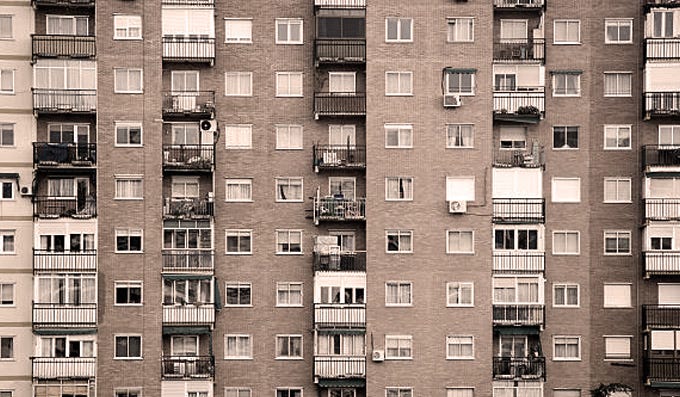
Meanwhile, rents climb, house prices become obscene and an entire generation is being told that adulthood is apparently an unaffordable luxury. This is no longer a housing crisis. It is a political crisis wearing a mortgage. Spain is only one of the clearest warnings. When housing policy becomes powerful enough to destabilise governments and trigger political confrontation, the message should be screaming across every European capital: people do not riot over architecture. They riot when they believe the system has decided that their lives are less important than somebody else's balance sheet.
And politicians still don't get it. They keep talking about "the housing market" as if they are discussing potatoes. Housing is not just another market. A person can live without a new car. They can postpone buying a television. They can survive without the latest smartphone.
Try postponing the need for a roof. Housing is the foundation underneath employment, family life, education, health, security and dignity. Without it, the rest of society becomes a grotesque exercise in pretending that everything is functioning.
Europe has created cities where the people who actually keep those cities alive increasingly cannot afford to live in them. Nurses commute ridiculous distances. Teachers struggle to rent near schools. Young workers remain trapped with parents. Couples postpone children. Students compete for tiny rooms at absurd prices. Elderly people fear losing homes they have occupied for decades.
And then the political class produces another PowerPoint presentation about productivity. Enough. The European housing system has become a machine for transferring wealth upward while politicians stand beside it holding a microphone and explaining that market forces are complicated.
Of course they are complicated. So is poverty. So is homelessness. So is watching your salary disappear into rent while someone who already owns five apartments becomes richer without lifting a finger.
The most poisonous consequence is not even economic. It is democratic. People who cannot afford to participate in society eventually stop believing society belongs to them. When the young are told that ownership is for their parents' generation and stability is for people who already possess capital, democracy starts looking less like representation and more like an exclusive club with elections every four years.
That is political dynamite. And the far right is perfectly happy to pick it up. The extremists do not need to manufacture people's anger. Governments are manufacturing it for them. All they have to do is point at immigrants, refugees, Brussels, foreigners, environmental regulations, universities or whatever convenient enemy happens to fit the day's propaganda.
The tragedy is that the original grievance is often completely legitimate. A young European who cannot afford an apartment does not need a lecture about tolerance. They need an apartment. A family crushed by rent does not need another speech about competitiveness. They need security.
A nurse who cannot afford to live anywhere near the hospital does not need politicians praising essential workers. She needs somewhere to live. This is where Europe's supposedly sophisticated political establishment has become intellectually bankrupt. It has treated housing as an investment opportunity when it should have treated it as national infrastructure.
Nobody argues that roads should exist only where property developers can make money. Nobody suggests that hospitals should be built exclusively for the wealthy. Nobody tells soldiers that national defence should depend entirely on whether private investors find missiles sufficiently profitable.
Yet when it comes to housing, suddenly the sacred invisible hand must be protected from the vulgar demands of ordinary human beings. That is ideological nonsense. Markets have a role. Property owners have rights. Private construction matters. But when the market systematically produces a society where working people cannot afford to live where work exists, governments have a responsibility to intervene.
Not with another committee. Not with another glossy strategy. Build homes. Public housing. Social housing. Affordable rental housing. Cooperative housing. Serious long-term planning. Land policies that stop cities becoming casinos for property speculation. And policies that recognise housing as infrastructure rather than another playground for wealth accumulation.
Because this is no longer about whether Europeans can buy their dream home. It is about whether Europeans can afford to remain Europeans in their own cities. Ignore that question and the consequences will not arrive politely through parliamentary procedure. They will arrive through elections, protests, rage and political extremism. The European political establishment should understand one brutally simple fact: People can tolerate many things.
They can tolerate bad governments. They can tolerate bureaucracy. They can even tolerate politicians lying to them. But when you take away the possibility of having a home, you are no longer asking them to tolerate bad policy. You are asking them to tolerate humiliation. And humiliation is where democratic patience goes to die.
* * * * * * * * * *
Published in Ovi magazine and across diverse print & digital platforms.